Ultimate Children’s Movies: The Iron Giant

Iron Giant is set during the height of the Red Scare in the 50’s, when the U.S. is bitter over the success of Sputnik and the Russian space program, and paranoia is everywhere. Suddenly the world was much smaller, and there was much less elbow room for the bigger countries, and worrying too much about what your neighbor (on a global and personal scale) was doing was just what folks did.

“You are who you choose to be.”

The Iron Giant is one of my favorite movies, easily. And yet I didn’t see it until about  a year ago, probably for the same reason a lot of people missed it–the marketing campaign.

Here’s the imagery of the original ad campaign:
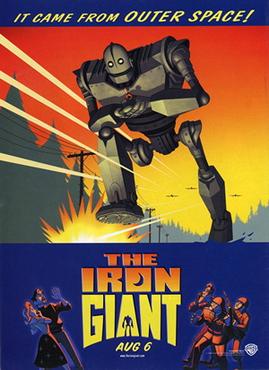
Seriously–great retro design, but definitely leaves a ‘stuff blows up!’ taste in your mouth.

It’s a great design–the retro styling has the 50’s sci-fi movie poster artwork down pat, and even directly quotes it with that most seminal of 50’s sci fi movies, It Came From Outer Space.

With the excitement of the action shot, and the robot dodging tracers from fighter jets, its easy to miss what he’s actually doing–he’s carrying Hogarth, the film’s human protagonist, as he runs for his life. The white lines made by the tracers draw your eye to the giant, but its easy to miss Hogarth clutched in his hands on a fast glance. This image is really the heart of the whole movie.

Here’s the recent dvd release cover art:

It Came From Outer Space to Learn Stuff About Having a Moral Compass
Thoughtful, much more slower-paced, lots of blues and greens

Very different, No? Leads you to memories of ‘E.T.: The Extraterrestrial,’ which is a much more apt comparison for this movie. Imagine if E.T. had been fifty feet tall, was a deadly walking weapon, and had the mind of a child.

Which is a shame, because what the filmmakers had on their hands (and probably knew it) was the E.T. for the Internet generation.

I may be biased because I am a huge fan of the film’s central message of personal accountability — the giant has been constructed as a weapon, a conquerer of worlds, but when he crash-lands on earth his memory is reset and he has amnesia. Enter Hogarth, an imaginative loner and only child, who finds the Giant and after a few bumps, becomes friends with him. Hogarth teaches the Giant that he is not what he is made to be, but rather, he is who he chooses to be.

I am a huge fan of personal accountability, in life. I think it’s up to every person to be the best person they can be, to try. The reason is because through that continual process of self-improvement, a person will find things out about themselves that they may have never known otherwise. How can you know your limits if you don’t push them? How can you know what tempts you if you’ve never known temptation? I guess I am making a big positive assumption about my fellow man–after all, a lot of people are capable of doing quite horrible things, but the point of all this is knowing yourself so that you know what harm you are capable of doing to others, and then not doing it. I know it’s convoluted, but it’s simple once you get down to the bare bones of it–Know Thyself. Just like the Greeks had over the doorway of the temple at Delphi, it is your responsibility to know yourself and be responsible for yourself, to take ownership of both your flaws and your good qualities.

This philosophy is also illustrated by the Giant himself–he’s 50 feet tall, and can do some SERIOUS damage if so motivated, or even if he’s just talking a walk. If he isn’t aware of his own movements he could easily crush Hogarth, or someone else, or even wipe out the whole town.When his weapons array is triggered later on, you see how easily he could dominate the whole earth, or worse, how a small force of Iron Giants could do the same.

Iron Giant is set during the height of the Red Scare in the 50’s, when the U.S. is bitter over the success of Sputnik and the Russian space program, and paranoia is everywhere. Suddenly the world was much smaller, and there was much less elbow room for the bigger countries, and worrying too much about what your neighbor (on a global and personal scale) was doing was just what folks did.

One wrong move, and a splat, a weird smell, and no more Hogarth.

Another great thing about the film are the supporting characters – a grab bag of 50’s tropes that could have been really shallow and one-dimensional, but who were so well-written that they really are worth a second look. There’s Hogarth’s mom, a single mother and waitress; Dean, the local beatnik scrap metal-artist (voiced by Harry Connick, Jr. in a really nuanced and great performance); even Kent Mansley, a pain in the ass G-man out to expose the giant and destroy it is well-fleshed out. He’s a man with ambition but no morals or concern about others or the ramifications of his own actions, and is essentially the polar opposite of the giant. Even General Rogard, a second-string character has unusual depth–aware of his responsibilities to the WHOLE nation, he must consider the potential risk in the idea of destroying a town of Americans in order to destroy the giant, and finds the idea horrifying and distasteful.I liked how the military wasn’t shown to be a bunch of single-minded drones; even though this film came out on the heels of the 90’s, when government plots were usually hand in hand with Sci-fi, based on the success of the X-Files.

What’s additionally interesting about Iron Giant are the questions that aren’t answered–and really, it’s a stronger story that way. It doesn’t matter, after all, it’s what he chooses to be that is the point.

Any way you slice it, Iron Giant is an instant classic, to borrow a phrase that has been overused to the point of cheapening its meaning–the movie really is a spectacular film for children, although maybe not very young children, given a few scary, intense moments. It’s literally a movie for all ages, since even at 32 years old I found it wonderfully intelligent, moving, and exciting at once.

Additionally, it was directed by Brad Bird, the genius behind The Incredibles and Up, and used to be involved with the Simpsons. Vin Diesel voices the giant (this was just as he was hitting it big), and there are a host of recognizable voices in the background of the story, all lending considerable weight to what oculd have been throw-away characters.

The Iron Giant is available on Instant Watch. You should go watch it RIGHT NOW.
East Meets Western Review: The Warrior’s Way; The Good, The Bad, and the Weird

The conflict is multilayered – there’s the immediate threat posed by The Colonel and his gang of murderous cowboys, the impending threat posed by the Sad Flutes as they pursue Yang, and the more subtle character conflicts of Yang attempting to leave his violent life behind, and Lynne avenging her family’s murder. If you’ve been watching a lot of Asian import movies in the past ten years, you’ll see a lot of familiar territory explored, but against the Western backdrop everything feels like a fresh new take.

Note: Since The Warrior’s Way is currently in theaters, I’ll try to avoid spoilers. I really do recommend this movie though, you can’t ask for a better time!

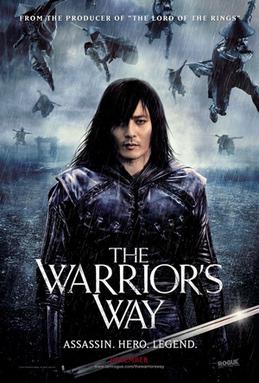
One reason why you haven't heard of this movie is the way it was marketed. Does this look like a crazy surrealist Western?

Let me just say that already, The Warrior’s Way is fast approaching the list of My Favorite Movies–a list that has many entries, some changing constantly, but which I will always come back to, again and again. I was really surprised by the vitriolic comments directed at it on the IMDB user board, and I’m not really convinced we saw the same movie, or went into it with the same expectations.

Written and Directed by Sngmoo Lee,

Warrior’s Way is the story of Yang, the world’s greatest assassin and member of the Sad Flutes gang. It’s never explicitly stated where he originates from, but given that the movie  involves ninjas, you might surmise it takes place in Japan, despite the fact that Yang is played by Jang Dong Gun, a Korean actor.  When tasked to kill the last member of a rival clan, thus ending a centuries-old war, he finds he can’t–because the target is a baby. Rather than kill the baby (although there is a  a picture of him in the dictionary under the entry for ‘Murder’) he flees. The rest of the Sad Flutes come after him, including their leader, the Saddest Flute, and so he flees to America with the baby.

The movie is a mix of practical sets and green screen, which lends a charming, nostalgic feel to the precedings. After all, this is NOT a historical movie by any means, and you’ll either suspend your disbelief with the first fight scene, or you won’t, which is probably what happened with all those negative comments. I went in expecting to have fun, and I did, as well as nearly crying at the end.

In the US, Yang finds a crummy town of shanties and shacks, half-digested by the desert, and populated by rustics and–weirdly–the members of a now-defunct circus troupe. The head of the whole shebang is 8-ball, an African-American dwarf (Tony Cox, best known from his role as the larcenous Marcus in Bad Santa) who used to be the circus’s ringmaster. Accompanying him are the various freaks and clowns and bearded ladies you’d expect of a circus troupe. Towering over everything are the skeletal remains of a Ferris wheel, silhouetted against the perpetually-sunset hued sky. He also meets Lynne (Kate Bosworth), whose entire family was murdered by local psycho gangleader The Colonel (Danny Houston, at his greasy, frightening best) and who desperately attempts to train herself with knives, despite being really, really inept at it.

As with more traditional Westerns before it, Warrior’s Way depicts Yang as a sort of Man with No Name trope; he comes to the town and begins to make a place for himself and the child, taking over his dead friend’s laundry and teaching Lynne how to be a better knife-thrower. I do have to say, at first when he took over the laundry house I kind of cringed, but it was also an interesting character and story move–here’s a man who has killed hundreds and could rule this town like a tyrant-king, but instead chooses to take up almost the lowest rung on the social ladder of the town. Not because he can’t do anything else, but because he is inflicting a self-punishment by washing other people’s drawers.

Not just a pretty face, he's also socially conscious! With cute anime shirts!

There has been much criticism about the stoic, almost monosyllabic performance by Jang in the film, compared to Geoffrey Rush’s over the top town drunk, or Kate Bosworth’s rootin-tootin performance as Lynne. I think it’s just a problem of perspective — having watched a lot of Asian and specifically Korean movies, I had no trouble connecting with Yang. The man was trained from a young age to be an emotionless murder machine, so as he attempts to cultivate gentleness within himself he also learns how to express himself without, you know, killing people.

Even a slight shift of his brows is for him like writing pages and pages of long slobby poetry about his feelings. Also, it’s not like Clint Eastwood was a fount of emotion in his Westerns–he got angry. He yelled. That’s about it. Unless we’re talking about Paint Your Wagon, which we’re not. Ever.

The conflict is multilayered – there’s the immediate threat posed by The Colonel and his gang of murderous cowboys, the impending threat posed by the Sad Flutes as they pursue Yang, and the more subtle character conflicts of Yang attempting to leave his violent life behind, and Lynne avenging her family’s murder. If you’ve been watching a lot of Asian import movies in the past ten years, you’ll see a lot of familiar territory explored, but against the Western backdrop everything feels like a fresh new take.

I also wanted to say that I was happy Lynne and Yang sort of almost start a relationship–too often in movies the minority mentor winds up a sexless monk, all teachy and supporty without any exploration of more complex feelings that would develop in such a relationship.

So the long and short of it is see the movie, it’s worth it. At the least, it’s definitely worth a rent on a Saturday night, best viewed with friends.

Warrior’s Way is in theaters right now. GO! GO SEE IT!

The New Hope of Westerns: East Meets Westerns

I love them, as I’ve already discussed in a few entries on my blog. There’s nothing like a Man With No Name cleaning up a town through a judicious usage of fists and bullets–especially when the bad guys are rapists or murderers. It’s awesome.

Westerns!

I love them, as I’ve already discussed in a few entries on my blog. There’s nothing like a Man With No Name cleaning up a town through a judicious usage of fists and bullets–especially when the bad guys are rapists or murderers. It’s awesome.

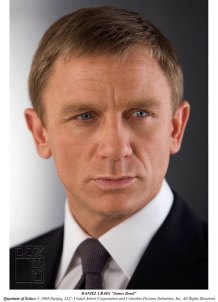
I’ve also already discussed my disappointment with the current spate of mopey, angsty Westerns that the US has produced: Movies like 3:10 to Yuma, The Assassination of Jesse James by the Coward Robert Ford, and  No Country for Old Men are all great movies, but the genre seems to be dominated by miserable people. Even the Australians got in on the mope-fest with The Proposition, which was another great movie but which was a little too rapey for me to really enjoy. I’m looking forward to the upcoming Cowboys vs. Aliens movie, but it’s also possible that won’t be intended as a Western at all and won’t explore Western tropes much. Also, Daniel Craig has monkey ears.

Also, I think he's afraid that if he smiles, his career will be over. Which doesn't bode well for Cowboys Vs. Aliens being a fun movie.

Apparently, in the middle of the 20th century, Eastern Europe began making Westerns called Osterns, which usually depicted Native Americans in a more compassionate light as freedom fighters, compared to their role in American Westerns as villains. I haven’t seen any of these, but I’m really curious to.


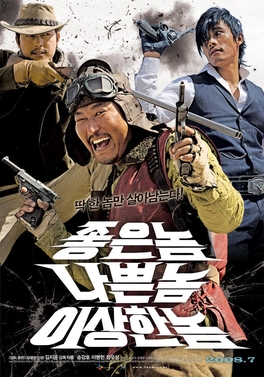
And now, breathing new life into the genre come a group I am going to call East Meets Westerns. Made by or starring Asians, the genre only has a few entries at the moment: The Good, the Bad, and The Weird; Sukiyaki Western Django; and The Warrior’s Way, which only came out this weekend in theaters.


I think of them as East Meets Westerns because I like how that sounds; the filmes of Sergio Leone were known as Spaghetti Westerns because they were made with cheap Italian labor in Italy, and that name has always bothered me a little. Of course the Italians call them something else, but it doesn’t seem like these new Westerns yet have a name. It could be because they aren’t intended to be their own genre–after all, it’s not like every movie that gets made in Asia has to be branded as part of a genre. But for the sake of searchability for enthusiasts, say on Netflix or through Amazon, they really should have their own name. God forbid someone searching for a good, fun Western gets suggestions for Westerns where everyone is miserable and dies at the end, when there are fun movies like this getting overlooked because of a semantics issue.

When Hollywood remakes this movie, they will meticulously remove every possibility of joy and no one will be smiling on the poster.

Anyhow, I’ll be reviewing Good, Bad and Weird and Warrior’s Way today, so that’s what we’re working on.

Great Moments in Humanism Entry: Groundhog Day

A movie like this is bittersweet, because while it enriches the viewer, I can think of countless people who would benefit from the kind of psychological ‘time out’ that Phil experiences. Because that’s what it is – someone basically said ‘You sit in this corner and think about what you’ve done,’ except on a cosmic scale.

Phil Connors: What would you do if you were stuck in one place and every day was exactly the same, and nothing that you did mattered?

Ralph: That about sums it up for me.

Seriously. This is amazing.

Groundhog Day.

You’ve seen it or, or you haven’t, or you’ve seen it, and wondered what all the fuss was about.

Or you’ve seen it, and you know exactly where I’m going.

Harold Ramis’s 1993 film Groundhog Day stars Bill Murray as egocentric megabastard Phil Connors, a cynical weather man with disdain for only the whole of creation, who is trapped in a strange time flux and relives the same day over and over again.

The premise sounds corny, and when I first saw the movie at age 12 or so I wondered what the hell was going on with it. But it stuck with me. It’s like bookmarking a page that has a word you don’t understand and mean to look up, and then years later you either understand the word or have enough experience under your belt that you can figure out what it means. I love things like that. . . that you need to mature in order to understand.

Newsman Phil has to go to Punxatawney Pennsylvania to report on the verdict of Punxatawney Phil, the most famous groundhog in the US, on whether or not to expect more spring or winter. Each day is begun with the alarm clock playing Sonny and Cher’s ‘I got you, babe,’ and at first Phil makes the most of his situation–since everything happens the same way every day, through observation he is able to later manipulate situations to his own advantage, and uses this knowledge to rob banks, romance women, eat horribly, and generally sate his most base appetites. When he realizes the one thing he wants that he can’t have is Rita, he embarks on a journey of never-ending self-destruction: despondent about being trapped forever in a small town with no consequences to his actions, he throws himself off buildings and crashes cars or steps in front of trucks in the hopes of killing himself and escaping the hell that is a never-ending Groundhog Day.

Get used to this image.

Groundhog Day was incredibly underrated when it came out–which is a shame, because it’s much smarter than the average crappy romance comedy/fantasy. There’s a key line that ties the whole movie perfectly together.

While attempting to romance the unwilling object of his affection, Rita, played by Andie MacDowell, Phil screws up and draws her ire. She slaps him and asks if the whole day has been some some big ploy to get her to love him. He responds with the incredibly apt: ‘But I don’t even like myself.’

That’s the key part of the whole movie–Phil’s cynicism and misery springs from the fact that he really, truly hates himself, and therefore everything and everyone else in the world.

Here’s the interesting part, where the movie goes from a goofy romance-comedy to a brilliant character study; we get to see Phil really grow and change as a person. He starts out a childish, selfish douchebag, belittling anyone who shows him kindness and dismissing kind people as weak. As he begins to manipulate situations to his advantage, thus getting anything he wants, he realizes that this is boring. He attempts to woo Rita, meticulously researching her likes and dislikes and trying desperately to synthesize a personality that she finds attractive: studying French poetry, memorizing her favorite things, and asking her endless questions to get to know her better. Alas, she sees through his attempts for what they are: a facile attempt to fool her into liking him.

He really does play in real life, I think.

After she drops him, his despondence leads to the aforementioned many suicide attempts. He is truly, truly miserable now, in a hell of his own making.

Since being a selfish bastard didn’t make him happy, he  decides to try going in the opposite direction: he becomes the town’s worker of small miracles, changing tires for old ladies, helping the helpless, etc.  His crusade of selflessness includes trying to save an elderly homeless man from death, and here he really begins to evince the change: unable to save the man, he finally begins to understand what caring for others is.

Since he seems to have unlimited time, he learns the piano and reads classical literature, teaches himself too cook and other tasks he might have overlooked or been uninterested in previously.  This intellectual banquet leads him to further realize how petty and mean he was before this strange phenomena happened to him, and his bad attitude is tempered and reshaped over the small eternity he spends on Groundhog Day.

A movie like this is bittersweet, because while it enriches the viewer, I can think of countless people who would benefit from the kind of psychological ‘time out’ that Phil experiences. Because that’s what it is  – someone basically said ‘You sit in this corner and think about what you’ve done,’ except on a cosmic scale.

It’s only when Connors learns to love himself, and by extension other people, that he is able to escape from Groundhog Day.

I like Groundhog Day because it imagines that even the most cold-hearted bastard is capable of change, given the right amount of time and right circumstances. Murray is the perfect person for this role, since he knows how to portray someone both cynical and warm: after all, cynics are usually people whose soft hearts were broken early in life, and grow callous and cold in an attempt to prevent it from ever happening again. Having been a cynic and grown up around them, I know exactly what I’m talking about. Murray probably knows that or experienced it in some form himself, since he illustrates it so beautifully in his characters. Sure, he doesn’t have the world’s widest range, but he has what he does down to a science.

Groundhog Day is available on Instant Watch.


Back from the Future Entry: Dorian Gray (2009)

In all, I think this adaptation was definitely watchable–as I mentioned, the costumes are great, the supporting cast perfect and Barnes does a marvelous job commanding every frame he’s in, but overall it doesn’t feel terribly imaginative–as a horror film it is far too light, as a thriller it has no suspense, and it’s very dark and violent for a costume drama.

YES HAVE SOME

If you haven’t heard of the most recent adaptation of Oscar Wilde’s best known work, then it’s probably because you aren’t spending your spare time stalking hot British men like Ben Barnes.

Having said that, yes, there is more to the movie than Barnes’s well-dressed hotness.

He gets naked, too.

The Portrait of Dorian Gray is one of those plum stories that I think most actors hope to be a part of–which is a double-edged sword, because only the young, hot actors can hope to even read for the part. And forget poor guys like Ray Winstone–unless there’s a special production aimed only at bears, it’s kind of a restrictive choice.

You need an actor who isn’t just hot, but beautiful. Someone who is both handsome and timeless, who you could imagine springing from a painting by Waterhouse or Caravaggio.

You need someone young. Someone who is on the edge of that perfect balance of beauty and maturity, whose face isn’t yet marred by the mileage of age.

You need someone who is both innocent and cruel.

This last is crucial – many actors excel at doing one or the other, but not both. Especially depending on how the production handles the character of Dorian, who himself is more of a blank canvas than a fleshed-out character: a Dorian who is too cruel is too clearcut a villain, when at least part of the story paints him as victim, too.

I wish Dorian Gray had been a more energetic entry to the canon of adaptations; the costumes and sets are beautiful, and the cast of seasoned veterans (and newcomer Barnes) play the story well, but overall the movie feels a little restricted; as if they hadnt’ quite dared to take more risks than those of the story. Colin Firth as the world-weary, wicked Henry Wotten is perfect,  and Ben Chaplin as Basil Hallward is another bit of inspired casting.

Can you spot what's wrong with this picture?

Of course the whole of the movie is Barnes’s performance as Gray–a young man whose childhood was marred by abuse and tragedy, and who has only just come to London after inheriting his Grandfather’s estate upon the old man’s death.

Immediately he is taken in and groomed by Wotten to be a high society type, and begins down a road of guilt and excess that would have put  Iggy Pop and most of the Rolling Stones to shame.

The eponymous portrait, painted by Basil and unwittingly cursed by Wotten, bears the marks of this life of excess, depicting both the physical damage of so much sadistic partying, and the mental damage of Gray’s cruelty.

What’s interesting is that the filmmakers made a massive mistake in interpreting Gray’s motivations, here– they assumed that because he bears no indications of his life of excess on his body, he is ‘free of consequence.’ He’s described in their making-of featurette as a kind of proto-American Psycho, a sociopath in the making.

Barnes, however, doesn’t really play Gray that way. He plays him more as someone who doesn’t realize his impact on others, rather than someone who doesn’t care about them. He’s young and naive, and as he becomes more and more evil certainly more selfish and sadistic, but it never seems as if he’s intentionally setting out to ruin other people’s lives. In a more capable filmmaker’s hands, he might have recalled John Malkovich in Dangerous Liaisons, the definitive object when it comes to depicting Rolling Whoremongery, but he comes off as more like a very young version of same, and then later creates his own character as an arch, jaded libertine with the face of an angel. Towards the end of the film he’s very much aware of the ruinous effect he’s had on others, and even attempts to steer people away from himself to preserve them.

In all, I think this adaptation was definitely watchable–as I mentioned, the costumes are great, the supporting cast perfect and Barnes does a marvelous job commanding every frame he’s in, but overall it doesn’t feel terribly imaginative–as a horror film it is far too light, as a thriller it has no suspense, and it’s very dark and violent for a costume drama.

Seriously, how could they just change his eyes like that? They're so striking!

I can’t help imagining what this might have been in the hands of Todd Haynes (Velvet Goldmine) or even Baz Luhrmann (Moulin Rouge), or maybe someone like Danny Boyle; there’s a lot of gay subtext that was barely touched on, and my overall impression of the film was that it was very dimly-lit and nobody had too good a time.

Which, you know, the whole point was to make his languid life of pleasure look COOL.