Gyllenhaalin’ Skincrawlin’ Entry: Nightcrawler (2014)

Nightcrawler is an absolutely brilliant film. It’s a modern noir take on a generation raised by journalism and the internet without being preachy, and I can’t recommend it highly enough for fans of dark humor and incisive social commentary. Since they are both about sociopaths, it inevitably draws comparisons with films like Taxi Driver and American Psycho, with good reason.

HEY WANNA GO FOR A RIDE?

[SOME SPOILERS!]

Nightcrawler surprised me. I had read the reviews on a few sites and knew it was good, but it also looked like the kind of dark thing I’ve been trying to avoid lately. A veteran of some pretty weird and extreme cinema, I wasn’t interested in spending 90 minutes with a Jake Gyllenhaal who keeps dead babies in his freezer or something. I barely leave the house as it is.

But as I said, it surprised me. For one thing, although it explores the pathology of sociopaths, it wasn’t as violent as I thought it would be. Gyllenhaal’s character of Lou Bloom is certainly a dangerous person, incapable of empathizing and soon begins leaving a trail of bodies in his wake, but the movie is almost like an origin story for a serial killer who hasn’t quite gotten started yet. Instead, it posits something even scarier – not a killer who hunts and pursues prey, but an opportunistic predator a little lower down on the food chain. Bloom is the kind of predator who has the patience to cultivate relationships and then strike when people are at their most vulnerable. In the Wiki entry, the filmmakers said that they were trying to characterize Bloom as a jackal, and I think they really succeeded. Some opportunistic predators are the last thing prey sees before they die, just as happens in the story.

The story is thin but more than balanced by the brilliant characterizations and performances. As mentioned, Gyllenhaal plays Bloom, a sociopathic autodidact who aggregates data like an algorithm, a metaphor fitting for the internet age without being overbearing. Just like Gmail doesn’t understand the context of some of the weirder terms in my personal emails (true story: years ago in my Google ads sidebar an ad for a white supremacist website came up because I was lamenting the existence of neo-nazis- No Gmail, that was wrong) Bloom fails to understand meaning or context. A junk metal scrapper and small-time thief, he wanders across the path of some freelance videographers and scents opportunity. Soon he’s haunting the police radio band and rushing to the scenes of crimes, sometimes before the first responders themselves arrive (another horrifying point, how late the cops sometimes are to the party) and capturing all the gory details with no concern for personal boundaries or the law.

HA HA, BUSINESS LAUGH!!!

He hires an employee played by Riz Ahmed, a sort of shiftless stoner guy. I’d never heard of Ahmed before but I loved the vague, ‘wait what’ tone of his performance. I hope he goes far. The scenes where they’re tearing around L.A. in Bloom’s sweet red SRT (and somehow not being noticed by the cops) are so well-done.

Rene Russo, perfectly capturing the world-weary newscaster with decades of bad road behind her as Nina Romina, is Bloom’s connect for buying footage. Although she senses the sickness behind the smile, she needs his footage and can’t cut him off, and soon finds herself strong-armed into a “relationship” with him.

As I said, the trope’s familiar but the strength of the performances saves it. If you’re going to have a film about a sociopath, your lead has to have the right kind of eyes, and Gyllenhaal does. 

The Abyss Stares Back!
When the abyss stares back, it will have Jake Gyllenhaal’s eyes.

Bloom has studied human behavior and empathy, and on the one hand he is absolutely earnest in his desire to please Romina. He knows all of the notes of the symphony but none of the meaning, and everything he does is calculated to benefit himself, so it makes sense that he really believes he can help her, because by extension he’s helping himself. Of course that’s not the problem; the problem is that he is forcing her into a relationship with him and leaving quite a trail of bodies in his wake.

BAH. There was a scene that I can’t find a .gif of that is just hilarious and shows the weirdly playful side of the movie, and it occurs during their disastrous and deeply unsettling “date.” Ah well! I’m curious to know if other people laughed the way I did at a certain line.

Bill Paxton shows up as a competitor of Bloom’s, who is obnoxious at first but comes to recognize Bloom’s talent and suggests a partnership, which Bloom blows off.

Look again at that gif up above. Look at the beautiful eyes, the self-assuredness, the complete confidence that Bloom emanates: He is right and she is wrong, he knows what’s best, and she just needs to accept it. Sociopaths are known for their charm and charisma.

Now look at this:

*jumps and falls backward out of chair*

I hate that I made such a pat point, but it really is amazing, his performance. He was nominated for a Golden Globe, but not an Oscar. There are so many great, passionate actors in the world! I would give them all Oscars if I could! Heh, and then everyone would be special so no one would be special. 

Anyhoodle, Nightcrawler is an absolutely brilliant film. It’s a modern noir take on a generation raised by journalism and the internet without being preachy, and I can’t recommend it highly enough for fans of dark humor and incisive social commentary. Since they are both about sociopaths, it inevitably draws comparisons with films like Taxi Driver and American Psycho, with good reason.

Nightcrawler is available on Instant Watch.
Another Kind of Christopher Lee Memory

It’s been a hell of a week, folks.

I had a crazy busy weekend, and then was down with food poisoning Monday and Tuesday. Wednesday I discovered my leave doesn’t accrue the way I thought and I’d have to burn two floating holidays to make up for the 48 hrs I spent on the bathroom floor.

I’ve done the sad thing for Christopher Lee, but the man made himself 5 lifetimes out of one and made it last nearly a century.

So let’s raise a glass (or a carafe, or a tumbler, or hell a bucket) and remember a man that grabbed life by the short hairs and didn’t let go for a long, long time!

Steven Glassman, I know you’ll remember this one! 😀

And because everyone else is posting it, here’s Sir Christopher’s version of My Way. I wish it was mastered differently, or maybe it’s my shitty speakers but his glorious voice isn’t given the attention it deserves. You could butter noodles with that magical bass!

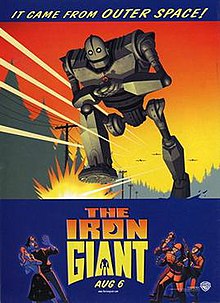
Additional Thoughts: The Iron Giant

I think one of the most poignant scenes of this movie is the moment we finally get to see humanity from the Giant’s perspective: after Hogarth tells him that the bomb will kill everyone, he looks down at all the little people scattered on the ground before him, and at the shops and buildings no bigger than snackboxes. With a few strides of his legs he would be free of the blast radius, or he could simply fly away. It’s just a little place on a world he isn’t from, and he doesn’t have to be a part of its problems at all.

Here is the original write-up that I did of the Iron Giant a few years ago.

Brought to you in Fan-TAST-A-Vision!

Last night I watched it again and had a few additional thoughts that I wanted to get down.

1. The Post-War Setting

Hogarth’s father has been killed in action, that much we can get from subtle hints through the movie:

  • Hogarth’s Mom is having financial difficulties and works as a waitress, renting out the room in their large house.
  • There’s a photo of a man climbing into a vehicle cockpit on Hogarth’s bedside table
  • One of the pictures that Mansley develops from Hogarth’s camera is of both Hogarth and his mom, begging the question, who took the picture? I’m guessing his Dad, before he went away
  • Annie calls Dean “sweetie” at the movie’s end and has clearly developed a relationship with him, indicating Hogarth’s dad is permanently out of the picture (unless Annie is rocking some seriously progressive relationship dynamics).

But there was something I noticed about twenty minutes in. I had absorbed it but never really thought about the other people in the town – it’s almost all women, kids, and older men. And I realized that it’s because all the younger men were called up for service in the war. And more than likely, didn’t come back. If that’s something intentional on the part of the filmmakers, then BRA-VO. That is a beautifully subtle reality of post-war life.

If this is accurate, then it also adds another layer of subtlety to Dean and Mansley’s characters – Dean might be a conscientious objector; the way the other men in the diner sort of dismiss him could just be because of his beatnik stylings, but it could also  be that he’s thought of as a “draft dodger.” And Mansley was left behind because he’s just plain incompetent.

2. Hogarth’s Reaction to Death 


OUCH!

Hogarth is a sensitive, intelligent, and creative boy. He saves the Giant when the latter is endangered at the power station. When the Giant destroys the traintracks, he is horrified at what could happen. When he and the Giant encounter the deer and the hunters, he gently tries to describe what happened to the deer, and is incensed when the Giant tries to pick the body up.

Additionally, he has a serious talk with the Giant about souls and what happens when you die. He quotes his mother’s belief in souls, and I imagined his mother having this discussion with him after his father passed away. It’s a terrible thing, to bury a loved one, and he doesn’t want anyone to experience what he went through, especially not at his expense.

3. Hogarth As Father Figure

Hogarth finds this creature, takes him in, and extends hospitality to him. He helps him find food, and a safe place to stay. He becomes the Giant’s protector, in a lovely role reversal. It’s not every ‘boy’s movie’ where the main character is a protector or nurturer. At very few times during the movie is Hogarth in danger – it’s the Giant who is in the most danger. At the end, Hogarth again saves the Giant by arguing with the General that he is not dangerous, although Mansley borks that plan by grabbing the telecom and commanding the Nautilus to fire its atomic weapon. The boy and Giant are literally following the roles of Jonathan Kent and Superman, and just as in that story, the child (Giant) matures and assumes the role of protector.

I think one of the most poignant scenes of this movie is the moment we finally get to see humanity from the Giant’s perspective: after Hogarth tells him that the bomb will kill everyone, he looks down at all the little people scattered on the ground before him, and at the shops and buildings no bigger than snackboxes. With a few strides of his legs he would be free of the blast radius, or he could simply fly away. It’s just a little place on a world he isn’t from, and he doesn’t have to be a part of its problems at all.

The Giant is destroyed in his role as protector, but as we see at the end of the film, he isn’t really gone. He’ll be back, and OMG I get emotional just WRITING about it. And Hogarth has a father figure again, both in Dean, and in the Giant, who’ll be returning soon.

4. Giant as Russia

Obviously, the film’s big themes are the Atomic Age and beginning of the Cold War. Dean literally tells the General that the Giant “will not attack unless he’s attacked first,” which was the entire situation of the Cold War. There’s even a joke about the Giant not wanting to be Atomo, the atomic robot villain.

Additionally, the fear and hatred whipped up in the townspeople by Mansley is also ephemeral once they realize the Giant poses no threat, and is even as invested in peace as they are. And, just as in nuclear holocaust, when you’re about to die the lines between hero and villain kind of fall away, since there’s no time left for such distinctions.

So those are the thoughts I thunk while watching it again last night. I do love a good, layered film that makes you think, and that you can see differently if you go back to it.

I hope you’re having a great day! If you haven’t checked this movie out, you might. It’s not on Instant at the moment but it’s widely available elsewhere.

Just, you know, maybe bring some tissues!

Bruges is Totally Not a Shithole Entry: In Bruges (2008)

It’s a hard movie to pin down – it worked hard to earn its R rating, but that doesn’t mean you shouldn’t see it, either. I’m an atheist, but I still appreciated its message of hope in the face of sorrow, of changing your ways, forgiveness, et cetera.

I can definitely recommend it as a great film, but I would say it’s probably not to everyone’s tastes. But all you can do is try!

In Bruges Poster.jpg
Atmospheric!

*THIS ENTRY WILL NOT CONTAIN SPOILERS*

I will now be absolutely 100% honest and say that it took me so long to see In Bruges because I am not a fan of Colin Ferrell. I don’t know what it is about him, but when I find out he’s in a movie my interest plummets. Which is unfair, because he’s a decent actor and I really found myself liking his character in this film.

In Bruges was nominated for a wagonload of awards after its release in 2008, including both its leads, Ferrell and Brendon Gleeson, being nominated for Golden Globes. Ferrell won, and he did earn it, I have to say.

In Bruges is a few different things:

In Bruges is about two hitmen laying low in an otherwise quiet and beautiful city at the behest of their boss after a  job goes bad. Ken, played by a calm, avuncular Gleeson, is enchanted by the history and architecture and begins sightseeing tout suite. Open-mouthed and bright-eyed, he is overjoyed by the chance to spend sometime in such an old, unpretentious city. Ray, played to the douche-hilt by Ferrell, refers to Bruges loudly and often as a “shithole” and bitches nonstop about their location.

One of the most important qualities a hunter must possess is patience, and I am going to extrapolate that Ken must be the greatest hitman in the history of murder due to the unending patience he has when dealing with Ray. My GOD, does that man know how to FUSS. It’s also a fascinating character study to consider how patiently Ken puts up with such a difficult person, considering he could just off the guy and the world would be the better for it.

A Sample of Ray’s Good Attitude

Ray really is his own worst enemy, as he can barely stay still five minutes without getting into some kind of trouble. He gets into an altercation with a nice American family by making fun of their “robust” build; he whines nonstop about their location and how bored he is; he begs Ken to let them go out and explore the city when they are supposed to wait at the hotel for their boss to call.

It’s all but impossible to avoid spoilers, but I want to say that the main theme of In Bruges is purgatory, or the place where you wait for judgment. AND THAT IS ALL I SHALL SAY. You’re smart, you can probably guess the rest!

Central to the plot is a little person, alternately referred to as a dwarf, a midget, Jimmy, and “that fuck who didn’t wave at me because he was on horse tranquilizers.” He plays a crucial role in a main character’s road to redemption.

It’s a hard movie to pin down – it worked hard to earn its R rating, but that doesn’t mean you shouldn’t see it, either. I’m an atheist, but I still appreciated its message of hope in the face of sorrow, of changing your ways, forgiveness, et cetera.

I can definitely recommend it as a great film, but I would say it’s probably not to everyone’s tastes. But all you can do is try!

In Bruges is currently available on Netflix Instant Watch.

EDIT: God I am dumb. I did this whole entry and meant to link to my friend Stephen’s blog entry about Bruges! He’s living in Germany and visiting as much of Europe as he can, and his blog is a great read for any travel buffs. Please jump over to his entry on Bruges!

In Bruges 

Enjoy!


Theater Release: Muppets’ Most Wanted

Bret McKenzie of Flight of the Concords fame is the music supervisor. In some ways it’s a long jump between Bowie’s in Space and the Muppets, but it also isn’t. Witty lyrics, catchy tunes, goofy jokes, and just good, solid songsmithing is at the heart of the Muppets.

Group picture of the muppets with 3 humans standing behind them

Last night my boyfriend took me to our favorite theater to see Muppets Most Wanted. It was a jolly good time I had to say.

Besides the jokes and general Muppetry being spot-on to the spirit of the Henson era, it also evoked a lot of Cold War nostalgia since the Russians are sort of the bad guys. Tina Fey stars as the head of the Siberian Gulag where Kermit is wrongfully incarcerated, due to a case of mistaken identity.

Ricky Gervais, Ty Burrell, Tina Fey and a host of cameos round out the cast, and I wish that the movie had been longer so that there was more for the rest of these actors to have more screen time.

So far it hasn’t made as much as the previous film, but I really hope it becomes a sleeper hit. It was just as adorable as the last installment, and the songs in some cases I enjoyed even more.

Bret McKenzie of Flight of the Concords fame is the music supervisor. In some ways it’s a long jump between Bowie’s in Space and the Muppets, but it also isn’t. Witty lyrics, catchy tunes, goofy jokes, and just good, solid songsmithing is at the heart of the Muppets.

As I child I remember seeing actors in the Muppet movies and wondering what other movies they had been in, and most often, they were in movies that were either over my head or weren’t exactly family entertainment. That noble tradition is carried on here, as some of the cameos include Christophe Waltz, Til Schweiger, Saiorse Ronan, Hugh Bonneville, Jermaine Clement (who I initially mistook for Benecio Del Toro in full shaggy weirdo mode) and Danny Trejo. Or at least I associate those actors with entertainment that’s not family friendly, unless your family is watching a lot of Quentin Tarantino movies.

Muppets Most Wanted is in theaters now. Go see it! Go! Go!